
LexiHK and Guangzhou Data Group’s judicial AI team held an initial exchange on 4 September 2026 under the Guangdong–Hong Kong smart city cooperation framework. The meeting explored legal AI applications across jurisdictions and identified potential collaboration in dispute resolution, financial compliance, practical use cases and legal datasets.
Representatives of the LexiHK team at the Hong Kong Generative AI Research and Development Center and Guangzhou Data Group’s judicial AI team met online on 4 September 2026 to discuss cross-border cooperation in legal artificial intelligence.
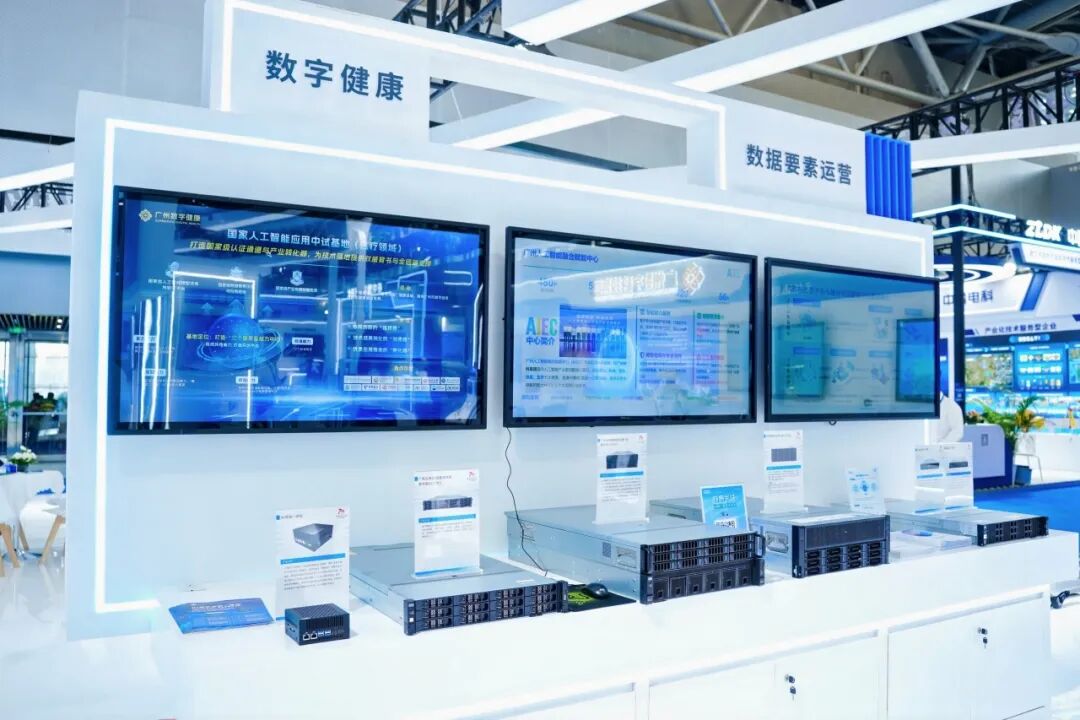
The exchange took place under a 2026 work item of the Guangdong–Hong Kong smart city cooperation framework. Led by the Guangzhou Municipal People’s Government and Hong Kong’s Digital Policy Office, the initiative brings together the Guangzhou AI Integration and Empowerment Center and HKGAI to support the development and performance of legal AI applications in both jurisdictions.
Participants introduced their platforms, discussed experience from practical applications and identified areas for further collaboration. They agreed to establish regular communication and clarify specific cooperation needs before developing a preliminary proposal.
Connecting different legal environments
Hong Kong and Guangdong operate within different legal systems, creating distinct requirements for legal information, reasoning and professional workflows. The meeting considered how the two teams could learn from these differences and develop complementary capabilities.
The discussion focused on exchanging technical and practical experience while accounting for the legal context of each jurisdiction. This approach provides a basis for identifying tasks in which cooperation could be useful and the requirements that cross-border tools would need to meet.
LexiHK development and professional applications
The LexiHK team introduced its platform as an intelligent legal workspace designed for Hong Kong practitioners. It described the use of a local legal knowledge graph and reasoning verification mechanisms to address fragmented legal information and the limitations of general-purpose AI in Hong Kong’s common-law context.
According to the presentation, the platform incorporates more than 200,000 local legal materials and offers eight core functions, including legal question answering and information retrieval. The team reported a question-answering accuracy rate of approximately 90 per cent.
The presentation also introduced LegalReasoner, which breaks down legal issues and checks intermediate reasoning, and SafeLawBench, a benchmark built around more than 24,000 professional questions. These research components were presented alongside the platform’s emphasis on traceable sources and reviewable outputs.
The team reported that more than 250 users were participating in a pilot involving government lawyers at Hong Kong’s Department of Justice. Potential future applications discussed included arbitration, mediation, dispute resolution and AI-supported law-firm management.
Judicial AI experience in Guangzhou
Guangzhou Data Group shared experience developing AI assistance for court workflows. Its presentation emphasised a division of responsibilities in which AI handles intensive and repetitive information processing, while judges retain responsibility for fact-finding and adjudication.
Applications discussed included importing and analysing case files, organising materials, preparing initial document drafts and checking structured content. The team reported reductions of approximately 50 per cent in file-review time and 60 per cent in case-processing duration in the applications it described.
The presentation also covered financial-dispute mediation, electronic-evidence verification, records of model use and simulated hearings supported by AI agents. These examples prompted discussion of how legal AI could assist both professional work and training.
Areas for further cooperation
Participants identified four potential areas for collaboration. The first was cross-border dispute resolution, including the ascertainment of foreign law and possible connections between platforms through application programming interfaces.
The second concerned financial compliance and asset verification, including support for evidence analysis, asset checks and information-intensive tasks relating to asset preservation.
The third focused on practical scenarios involving Hong Kong and Macao enterprises investing in the mainland and mainland enterprises seeking listings in Hong Kong. Qianhai and Nansha were discussed as possible settings for exploring cross-jurisdictional use cases.
The fourth concerned the use and sharing of high-quality legal datasets and the development of applications drawing on these resources.
These areas remain proposals for further exploration. The teams will maintain communication, refine their requirements and develop an initial cooperation plan based on the exchange.
The meeting established a starting point for connecting legal AI development in Guangdong and Hong Kong, with further work directed towards specific professional needs and the practical demands of operating across jurisdictions.
Source
AI and Law Research, report on the initial Guangdong–Hong Kong legal AI exchange, published 7 September 2026. Meeting held 4 September 2026. Platform performance and pilot figures are attributed to the teams’ presentations in that report.
All events and news